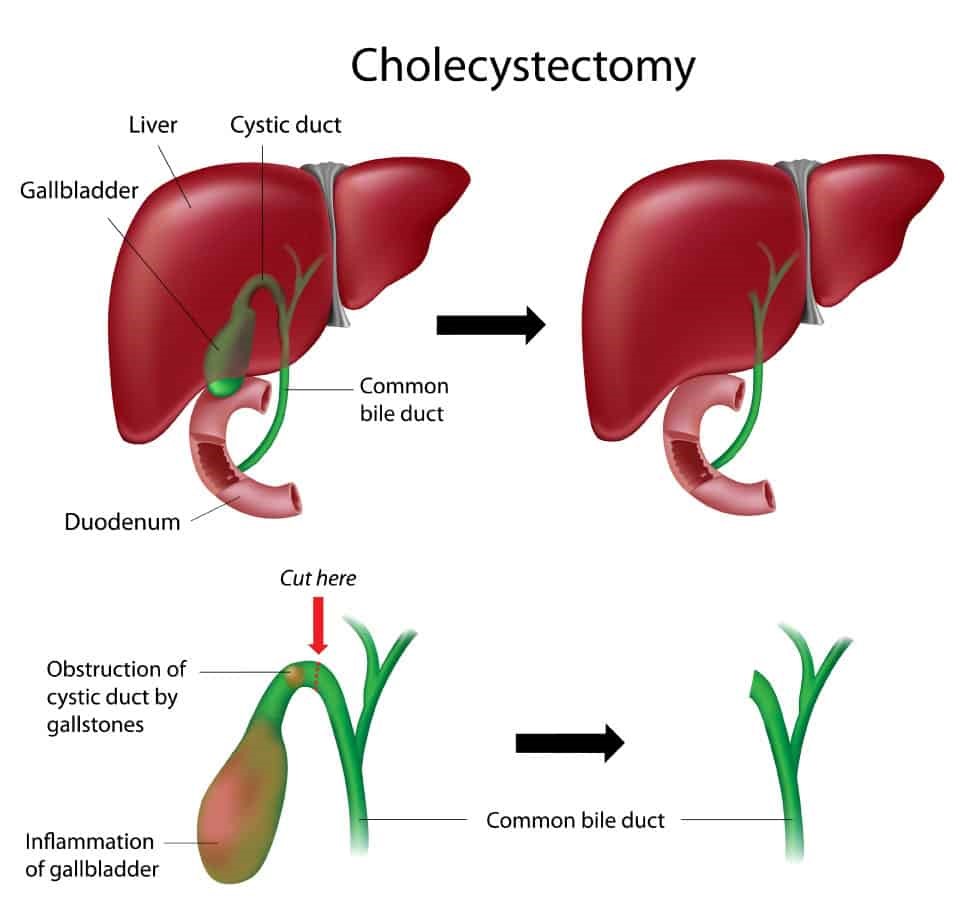
A cholecystectomy is a surgical procedure to remove the gallbladder, a small organ located under your liver. The gallbladder stores bile, a fluid produced by the liver that helps digest fats. Sometimes, the gallbladder can develop problems like gallstones or inflammation, which can cause pain and other issues. When this happens, doctors may recommend removing the gallbladder through surgery.
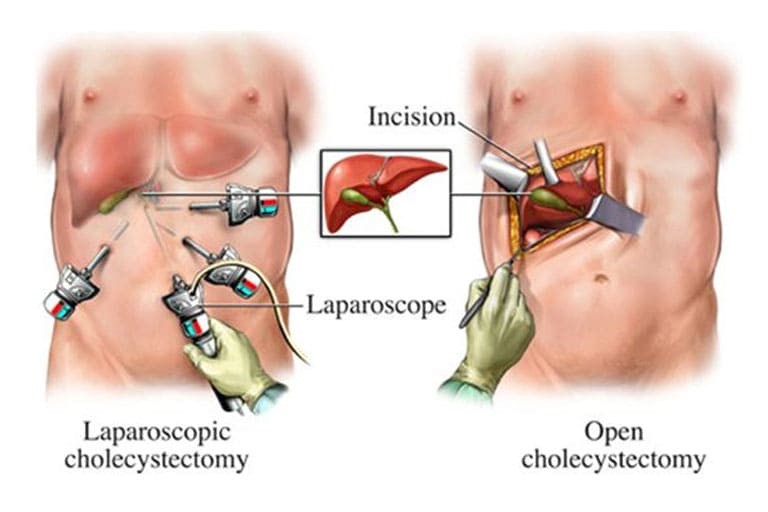
There are two main types of cholecystectomy: laparoscopic (minimally invasive, using small incisions and a camera) and open (a larger incision is made in the abdomen).
• Laparoscopic Cholecystectomy: A minimally invasive surgical procedure to remove the gallbladder using small incisions and a camera, resulting in less pain and quicker recovery compared to open surgery. • Open Cholecystectomy: A traditional surgical method involving a larger abdominal incision to remove the gallbladder, typically used in complex cases or when laparoscopic surgery isn’t feasible.
Symptoms That May Lead to a Cholecystectomy:
If you have gallbladder problems, you might experience symptoms like:
• Severe pain in the upper right or center of your abdomen (this pain can spread to your back or shoulder). • Nausea or vomiting. • Fever or chills (if there’s an infection). • Bloating or indigestion, especially after eating fatty foods. • Jaundice (yellowing of the skin or eyes) if a gallstone blocks the bile duct.
These symptoms often occur due to gallstones (hard particles that form in the gallbladder) or cholecystitis (inflammation of the gallbladder).
When You Visit a Surgeon
If you’re experiencing the symptoms mentioned above, your primary doctor might refer you to a surgeon. During your visit, the surgeon will:
1. Ask about your symptoms and medical history.
2. Perform a physical exam.
3. Order tests like an ultrasound, CT scan, or blood tests to confirm if your gallbladder is the problem.
Based on the results, the surgeon will decide if you need a cholecystectomy and whether a laparoscopic or open procedure is best for you.
Why is it Important to See a Surgeon?
Seeing a surgeon is crucial because:
1. Accurate Diagnosis: A surgeon can confirm whether your symptoms are due to gallbladder issues or something else. 2. Prevent Complications: If left untreated, gallbladder problems can lead to serious complications like infections, pancreatitis (inflammation of the pancreas), or a ruptured gallbladder. 3. Personalized Treatment: A surgeon will recommend the best type of surgery (laparoscopic or open) based on your condition and overall health. 4. Relief from Pain: Removing the gallbladder can eliminate the pain and discomfort caused by gallstones or inflammation.