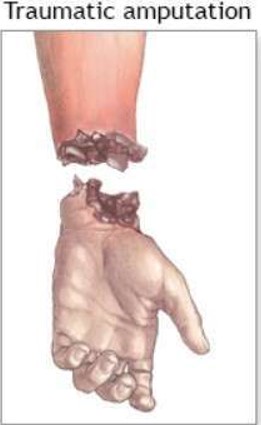
Amputation is the surgical removal of a body part, usually a limb (like an arm, leg, hand, or foot), due to injury, disease, or infection. It’s done when the affected body part can no longer function properly or poses a risk to the rest of the body.
Symptoms That May Lead to Amputation:
Amputation is usually considered when other treatments fail, and the following symptoms or conditions are present: ● Severe injury (e.g., from an accident or trauma) that damages the limb beyond repair. ● Poor blood flow to the limb, often due to conditions like diabetes or peripheral artery disease. ● Serious infections that spread and cannot be controlled with antibiotics. ● Tumors or cancers in the limb. ● Frostbite or burns that cause irreversible damage.
When Should You Visit a Surgeon?
If your doctor recommends seeing a surgeon for amputation, it means they believe removing the affected body part is the best option to protect your overall health. During your visit, the surgeon will: ● Examine the affected area.
● Review your medical history and test results (like X-rays or blood flow tests).
● Explain why amputation is necessary and discuss the procedure in detail.
● Answer your questions and address any concerns.
Why is it Important to See a Surgeon?
Seeing a surgeon is crucial because: ● They specialize in determining whether amputation is the best option.
● They can perform the surgery safely and minimize risks.
● They help plan for life after amputation, including rehabilitation and prosthetics (artificial limbs).
● They ensure the procedure is done in a way that promotes healing and reduces complications.